What is a Non-Binding Offer (NBO)? The low-risk first step in any deal
9 September 2026BizBuy
The offer that commits nobody
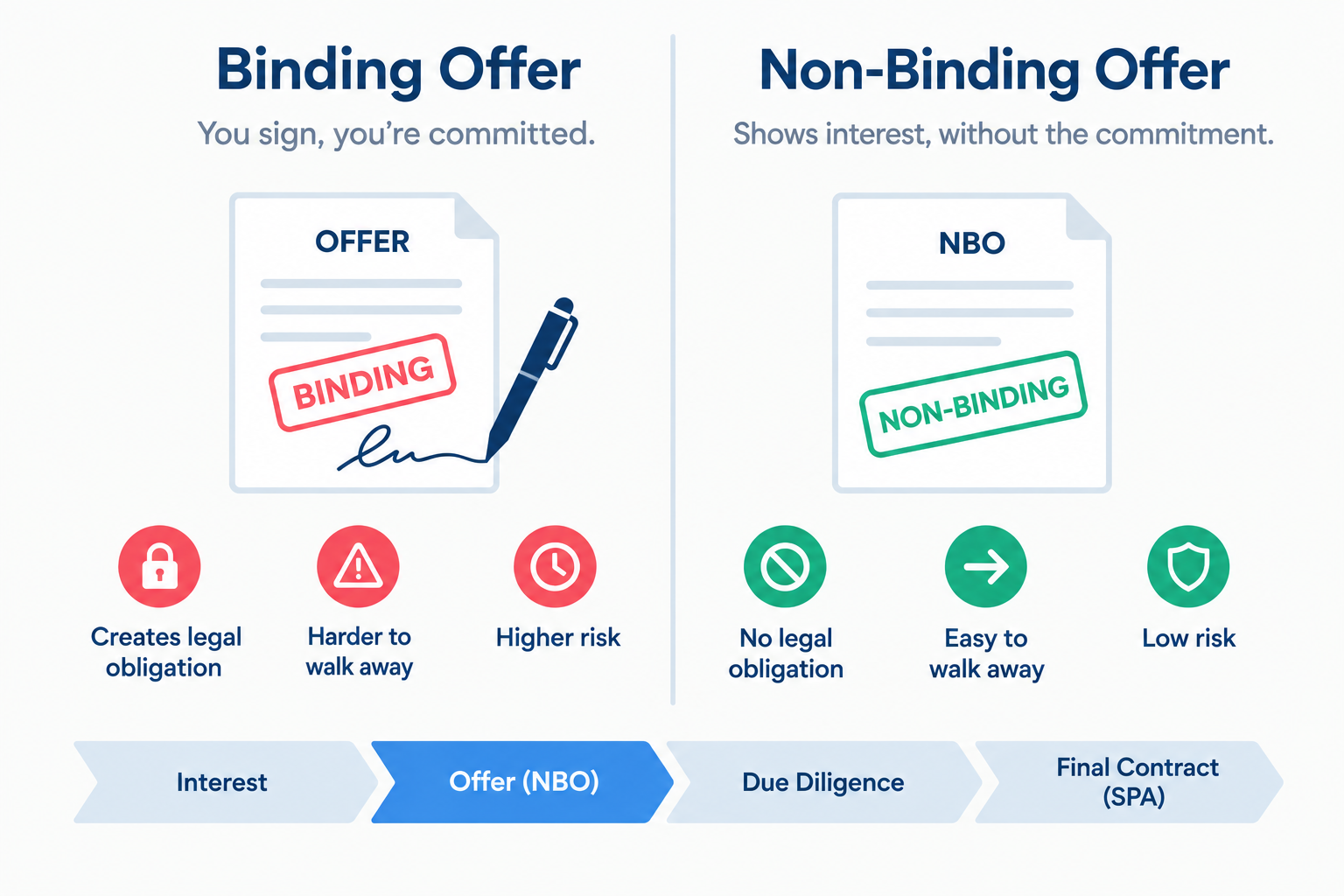
An NBO — a Non-Binding Offer (you’ll also hear it called a Letter of Intent, an LOI, or an indicative offer) — is a structured proposal a buyer puts on the table: the price they’re offering, how they’d pay it, and the key conditions attached. The most important word in the name is “non-binding”: signing an NBO does not commit either side to actually completing the sale.
What an NBO is actually for
An NBO moves a deal from “I’m interested” to “I’m serious.” It gives the seller a concrete number and structure to react to instead of vague chit-chat, and it’s the step that opens due diligence — the point where a buyer gets to look properly under the hood. Think of it as agreeing the shape of a deal before either side spends real time, money and lawyers proving it out.
Why there is (almost) no risk
Because it is non-binding, either party can walk away, counter, or decline — right up until the final, binding contract (the SPA, or Sale and Purchase Agreement) is signed. If due diligence uncovers a problem, the buyer can renegotiate the price or leave. If the seller changes their mind or finds a better-fit buyer, they can decline. Nobody is locked into the sale by an NBO. It is deliberately the low-commitment way to start a real conversation.
On BizBuy it works exactly this way: a buyer must have passed identity verification (KYC) and signed the platform NDA before they can even make an offer, and the NBO itself is a structured letter both sides sign to acknowledge. The seller can accept, counter, or decline it. Accepting a signed offer is what opens your data room — financials, licence, lease and contracts — to that one buyer, and nobody else.
The one moment risk appears: exclusivity
There is exactly one place real commitment can creep in, and it is worth understanding clearly: exclusivity. Sometimes a buyer will ask for an exclusivity period — a window, often 30 to 60 days, during which the seller agrees not to talk to or accept any other buyer while that one buyer completes due diligence. That is a genuine commitment for the seller: you are effectively taking your business off the market for a single buyer. If they drag their feet or walk away at the end of it, you have lost time and momentum with everyone else.
So exclusivity is a trade. You give a serious buyer the room to spend money on diligence knowing they won’t be gazumped; in return, you pause every other conversation. The rule of thumb: grant it only to a buyer who has proven they are serious and funded, and keep the window short and firmly time-boxed. On BizBuy, exclusivity is explicit — while it is active, the listing pauses other contacts and offers, so everyone knows exactly where they stand.
The bottom line
An NBO is the safe, standard way to turn interest into a real deal without anyone committing to buy or sell. It sets the terms, opens the books, and keeps you in control — all the way to the final contract. The only real commitment along the way is exclusivity, and that is always your choice, on your terms. Make the offer, do the diligence, and stay in control until the day you decide to sign.
Thinking of selling — or looking to buy?